Launch your own telemedicine empire.
We build everything—
you keep 50–75%.
A fully branded white-label platform live in 30 days. We supply the physicians, pharmacy, call center, compliance, and marketing — every operational layer. You bring the audience. Top partners clear over $1,000,000 a year.
14
May 2026
50/50 Profit Sharing on High-Margin Treatments
# Maximizing Profits and Partnerships: 50/50 Profit Sharing on High-Margin Treatments
## Introduction
In today’s competitive healthcare and wellness markets, including medical spas, dental clinics, dermatology practices, and elective surgical facilities, providers are continuously seeking strategies to boost revenue, enhance patient satisfaction, and incentivize staff performance. One powerful yet underutilized strategy is a 50/50 profit-sharing model on high-margin treatments. By dividing net profits equally between the practice and the treating provider or team, both parties benefit financially, aligning goals, increasing motivation, and fostering steady growth in the practice.
### What is 50/50 Profit Sharing?
Under a 50/50 profit-sharing plan, the practice calculates net profits on selected high-margin procedures, such as laser therapies, cosmetic injectables, veneer cases, or advanced orthodontic appliances, after deducting direct costs like consumables, device maintenance, and lab fees. The remaining profit is then split equally between the clinic and the provider or service team that delivered the treatment. Unlike traditional salary or commission models, this approach ties compensation directly to treatment profitability, encouraging providers to focus on efficiency, patient care, and upselling when appropriate.
### Key Benefits of a 50/50 Profit-Sharing Model
#### Aligned Incentives
Providers earn more when the practice thrives. This alignment encourages everyone to work toward common goals—higher case acceptance, optimized scheduling, and superior patient outcomes. Dr. Jane Smith, a financial expert in healthcare, notes, “Aligned incentives drive not only profits but also enhance the quality of patient care.”
#### Increased Motivation
Team members receive a direct financial reward for improving case success rates, minimizing waste, and enhancing patient education, rather than relying on fixed salaries or flat fees.
#### Reduced Financial Risk
Practices retain half of each profit dollar, ensuring sufficient revenue remains to cover fixed costs, marketing, and equipment upgrades. Providers do not shoulder overhead alone, making the plan more appealing.
#### Scalability
As your practice grows and case volume increases, both parties benefit. High performers are rewarded, creating a built-in retention tool and reducing turnover costs.
#### Enhanced Patient Experience
Providers motivated by profit sharing tend to invest more time in patient consultations, follow-ups, and comfort measures—leading to better case acceptance and loyalty.
### Selecting the Right Treatments
When determining which services are suitable for profit sharing, it’s crucial to choose treatments with high material or lab costs that can be accurately allocated, such as porcelain crowns or advanced injectables. Additionally, services with a straightforward consumables structure, measurable clinical outcomes, and strong demand make ideal candidates. For instance, according to a report by the American Dental Association, cosmetic procedures saw a 20% increase in patient requests over the past two years.
### Implementing Your Profit-Sharing Program
#### Define Profit Calculation Rules
a. Identify direct costs—materials, lab fees, disposables.
b. Reserve a percentage for marketing and maintenance.
c. Agree on how overhead and administrative expenses are covered.
#### Select Participants
Choose providers or teams who have demonstrated clinical excellence and strong patient rapport. Consider a trial period for newcomers.
#### Communicate Transparently
Provide clear monthly or quarterly statements showing revenue, costs, and net profit. Transparency builds trust and keeps everyone focused on improvement.
#### Offer Ongoing Training
Invest in continuing education on communication, case presentation, and clinical techniques to maximize treatment acceptance and outcomes.
#### Monitor and Adjust
Review your plan’s performance every six months. If specific costs rise, adjust the baseline or modify the list of eligible treatments.
### Avoiding Common Pitfalls
* Over-Complex Accounting: Keep profit calculations straightforward. Complex spreadsheets and line-item arguments frustrate providers.
* Unrealistic Expectations: Launch with realistic volume targets. A slow start can dampen enthusiasm.
* Ignoring Quality: Profit sharing must never encourage cutting corners. Monitor patient satisfaction and complication rates closely.
* Insufficient Marketing: High-margin treatments require a steady pipeline. Allocate a portion of profits to targeted digital and community outreach. Consider partnering with marketing experts to amplify reach effectively.
### Case Study: Radiant Smiles Dental Studio
Radiant Smiles, a mid-size dental practice, introduced 50/50 profit sharing on porcelain veneer cases six months ago. Before the program, veneer acceptance hovered at 20% of recommended cases; net profit per case averaged $1,200. Today, acceptance rates have climbed to 35%, and average net profit is $1,500 (after material and lab costs). Both the practice and the lead dentist have seen a 25% boost in income. Crucially, patient satisfaction scores increased from 4.2 to 4.8 out of 5, reflecting improved consultation processes and follow-up protocols funded by profit reinvestment.
### Making the Model Sustainable
* Reinvest Half Your Share: Dedicate a portion of the practice’s profits to equipment upgrades, staff bonuses, and marketing. This reinvestment sustains momentum and signals long-term commitment.
* Foster a Culture of Collaboration: Encourage providers to share best practices, conduct peer-to-peer training, and celebrate collective wins.
* Keep an Open Feedback Loop: Regularly survey providers and front-office teams about the plan’s fairness and clarity. Adjust profit-sharing criteria as market conditions evolve.
## Conclusion and Call to Action
Transitioning to a 50/50 profit-sharing model on high-margin treatments can transform the way your practice operates, driving higher revenues, improving patient outcomes, and strengthening team morale. By aligning financial incentives, promoting transparency, and investing in continuous education, you’ll create a growth engine that benefits everyone: practice owners, providers, staff, and patients alike. Ready to take the next step? Schedule a consultation with our profitability strategists today and discover how a tailor-made 50/50 profit-sharing program can optimize your practice’s financial health and unlock untapped revenue potential.
### References
1. American Dental Association: “Trends in Cosmetic Dental Procedures”
2. eDrugStore.com – Expert marketing solutions for healthcare providers.
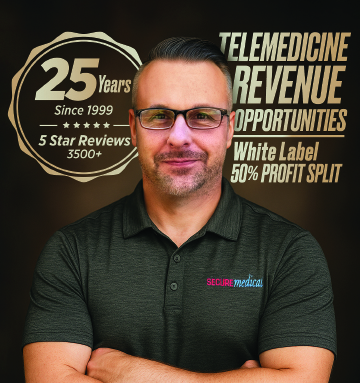
Kyle Rao is the Chief Executive Officer and Co-Founder of Secure Medical Inc and TelehealthCash, a white label telemedicine platform built to help entrepreneurs, brands, pharmacies, and healthcare partners launch scalable digital healthcare businesses. Under Kyle’s leadership, TelehealthCash has focused on simplifying access to nationwide telemedicine infrastructure through fully branded solutions powered by physician networks, ePrescribing technology, compliance systems, and fulfillment operations.
With more than 20 years of executive leadership experience, Kyle specializes in digital healthcare strategy, business development, mergers and acquisitions, and scalable online healthcare operations. His vision has helped position TelehealthCash as a trusted telemedicine infrastructure partner for companies looking to rapidly enter and grow within the evolving virtual healthcare market.